Showing posts with label aesthetics. Show all posts

Tuesday, November 25, 2025

Die Vaterland Is Calling Me Back

Any American abroad has probably had this experience. You’re sitting at a bar on some foreign shore, and eventually you disclose where you’re from, if they haven’t figured it out already (and no faking you’re Canadian, that’s pussy shit and you know it). And eventually, they can’t help themselves, but say something along the lines of…

“Ha ha you Americans think cheese comes in cans, ha! Cheez Whiz ha! What you want to shoot your gun at me, Wild Bill Hickok?”

I mean, I enjoy dunking on my own country, and if they’re clever enough and interesting enough to talk to, I’ll join in on the jabs on the States, and make a few regarding their country too. After all, I’ve probably had Cheez Whiz less than five times in my life, so I’m perfectly happy incorporating other nations’ unfair stereotypes into the banter. Friendly ballbusting is one of the best forms of diplomacy.

And while I’ve had this conversation with people of many nations, Germans are by far the worst offenders. When I see the guy in the Birkenstocks with wool socks, I know he’s going to give me a talking to, and he probably won’t be nearly as funny as his Irish or Mexican equivalent.

But then I look around, as I sip my Riesling in a chilly autumn public square in the Bundesrepublik, at the apple cheeked and neckbearded young men in shapeless hoodies, at the icy slender blonde women with ponytails wearing jogging gear, at the jowly and thick-necked and beer-gutted old men in polyester, at the ladies pouring me the excellent wine – one with scraggly hair and eyeliner too thick in a pink fleece jacket, one with hair chopped short and square-framed glasses – all the faces I know from the golf courses and prayer breakfasts and dental offices of Des Moines.

But it’s not just the rubicund phenotype, which of course crossed the Atlantic from greater Germania to my native Middle West.

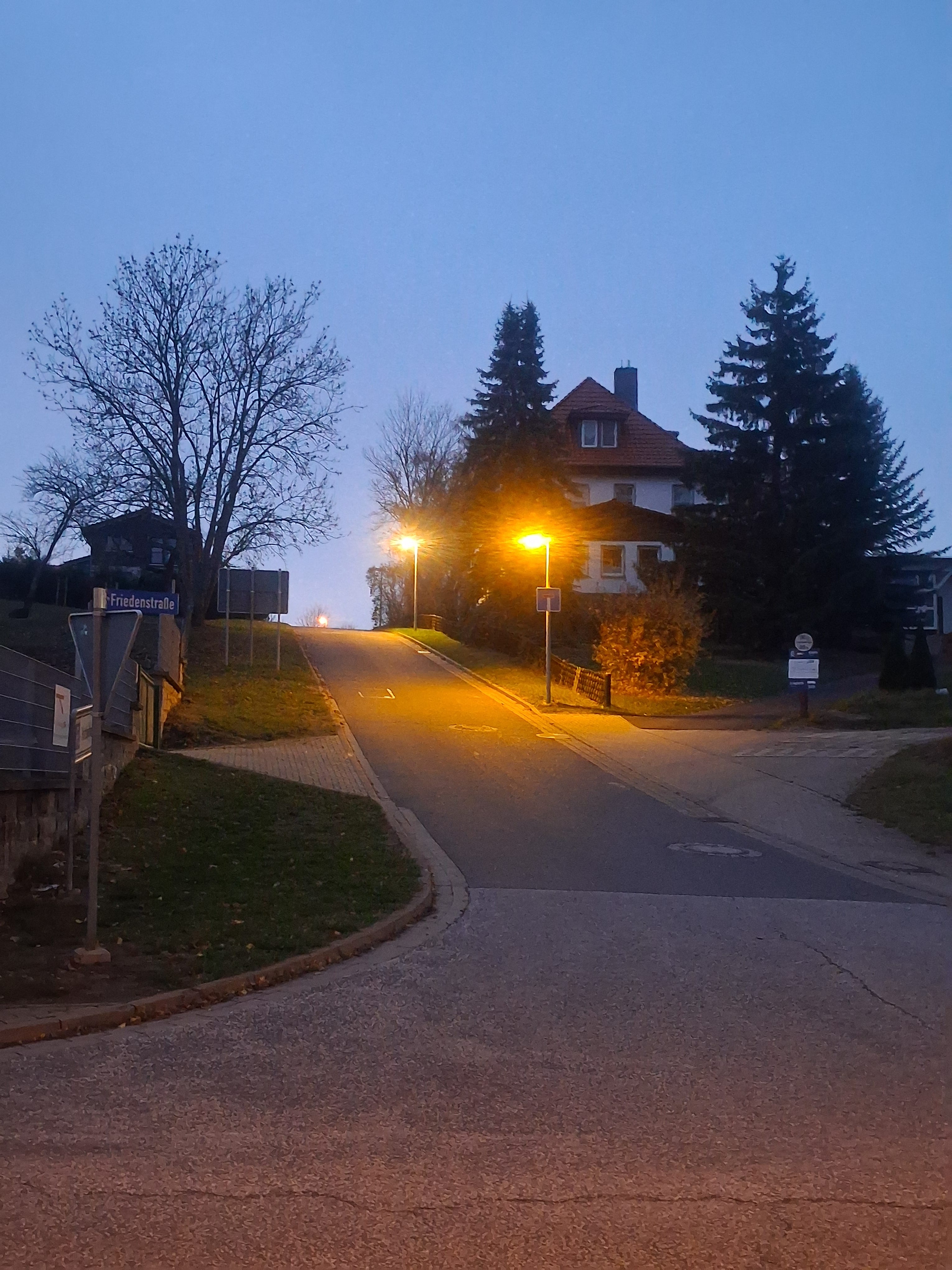
You have your image of German food, giant sausages and hunks of meat and heaps of potato salad and mash, washed down with great flagons of beer. It’s not at all bad, and can even be very good – but really how much difference is there between that and what you’d get at the average Wisconsin supper club? But just like in Middle America, that’s far less abundant than the takeout places where you can get a pizza or some fast food with origins from migrating brown people (tacos for us, kebabs for them). And whoever talks about the superiority of European groceries has never been to a Rewe supermarket in provincial Germany. At a cozy little tavern, they keep promoting something called “pizza salad.” I am not tempted. In a little town at the foot of the Harz Mountains, I see the fluorescent-lit Chinese place in the Aldi parking lot. There’s a special on orange chicken today.
Or consider the shops I pop into. Granted, the local wine they’re selling is a damn sight better than what you’d get in Ohio, but other than that? Shitty elevator music, kooky little tchotchkes with cutout wooden hearts, doilies with little jars of jam, disgusting fruity home scents. I might as well be at a welcome center on I-90.

Some ladies doth protest too much indeed.

Of course, I came for something more transcendent, and I found traces – I found it in the mist-wreathed schlossen high above the vineyards of the Mosel, where blue slate gravels give us wines of incomparable elegance, or in the spooky old East German transmitter tower emerging through the icy fog high up on the Brocken, from where the witches fly from on Walpurgisnacht, and from where a certain Austrian broadcast his commencement speech for the 1936 Olympic Games, but fuck his teetotaling and vegetarian ways, I had hot coffee enlivened with herbal bitters and a bowl of solyanka to beat back the chill. In the smoke-filled café lined with yellowed movie posters, covered in decades of graffiti, angular men behind the bar, Ian Curtis’ voice warbling through the speakers. In the skeletal industrial wastelands of the Saarland I know from the photography of Bernd and Hilla Becher, in the agonized faces of Albrecht Dürer and Matthias Grünewald, in the scarred heads of Christ and the Four Evangelists in the old basilica built by Emperor Constantine, its adornments ripped out in the Protestant Reformation, its heavy cedar roof destroyed by British bombs, and so all that was left of the old splendor were the chipped and cracked faces of a few old visionary Jews.

So I didn’t feel entirely like I was in Davenport. Entirely.

And Berlin, of course, is nothing like Davenport, but this isn’t to say it’s nothing like America, because it’s exactly like Brooklyn.

The hipstery parts of Berlin have remained relatively inexpensive compared to their NYC, SF, and London equivalents. Now, the lingua franca is just as likely to be English as it is to be German, the twitchy Anglos trying to stretch their money fill the streets. Yet there are still enough people who seem to be out doing the thing, some version of that old dream – move to the city, dive into your endeavors with like-minded freaks, hopefully attract the attention of the capital class. Even if many of the forms that now takes look cringe to my aging mind, some possibility still exists, and in that way it’s a bit of a time warp. I asked the bartenders for where to get late night eats, and they had an encyclopedic inventory of open-late immigrant takeout joints, got some kofte, strolled home through the autumn air, and in my morning shower, the perfume of the bar, cigarettes and Nag Champa incense, wafted off my skin and hair… I was 23 all over again.

OK, so it’s not some Berlin of the mind. Sure, I know it’s foolish for me to expect Sally Bowles and the city of stones, David Bowie and Nick Cave lost in the synthesizers and narcotics, commissars in leather coats and skulking dominatrices in leather thigh-highs, but of course I wanted to. But relatively little of those old Berlins remains. Not only because of the carpet air raids of a proud mustachioed Rhodesian who went by the moniker Bomber Harris (“no tears for jerries!”), but also the upheavals of the postwar years, with modernists on both sides of the Wall showing little regard for the past, especially since anything associated with that saber-rattling Prussian kultur was now automatically suspect. This in turn was followed by the giddy boom years after the reunification, so even that modernist optimism towards the future is now passe – the major structures built during the GDR era are torn down without a second thought, and nostalgists have been erecting neoclassical reconstructions of buildings destroyed during the war as if nothing had happened between now and then.

What is there now? Like I said, Brooklyn. There are still a few relics, proud old industrial canals and riverfronts, even if they’re no longer producing motorcycle parts but vegan brownies made with fair-trade chocolate, and there are still the dirty counters on old brick streets where I can get the specialty of the neighborhood (pastrami on rye and a Dr. Brown’s soda for Brooklyn, currywurst and light Berliner weisse beer topped with woodruff syrup for Berlin), there were the cool little galleries, the cocktail bars with skinny intense dudes pouring me a complimentary flight of different evergreen-infused spirits, all of them excellent.
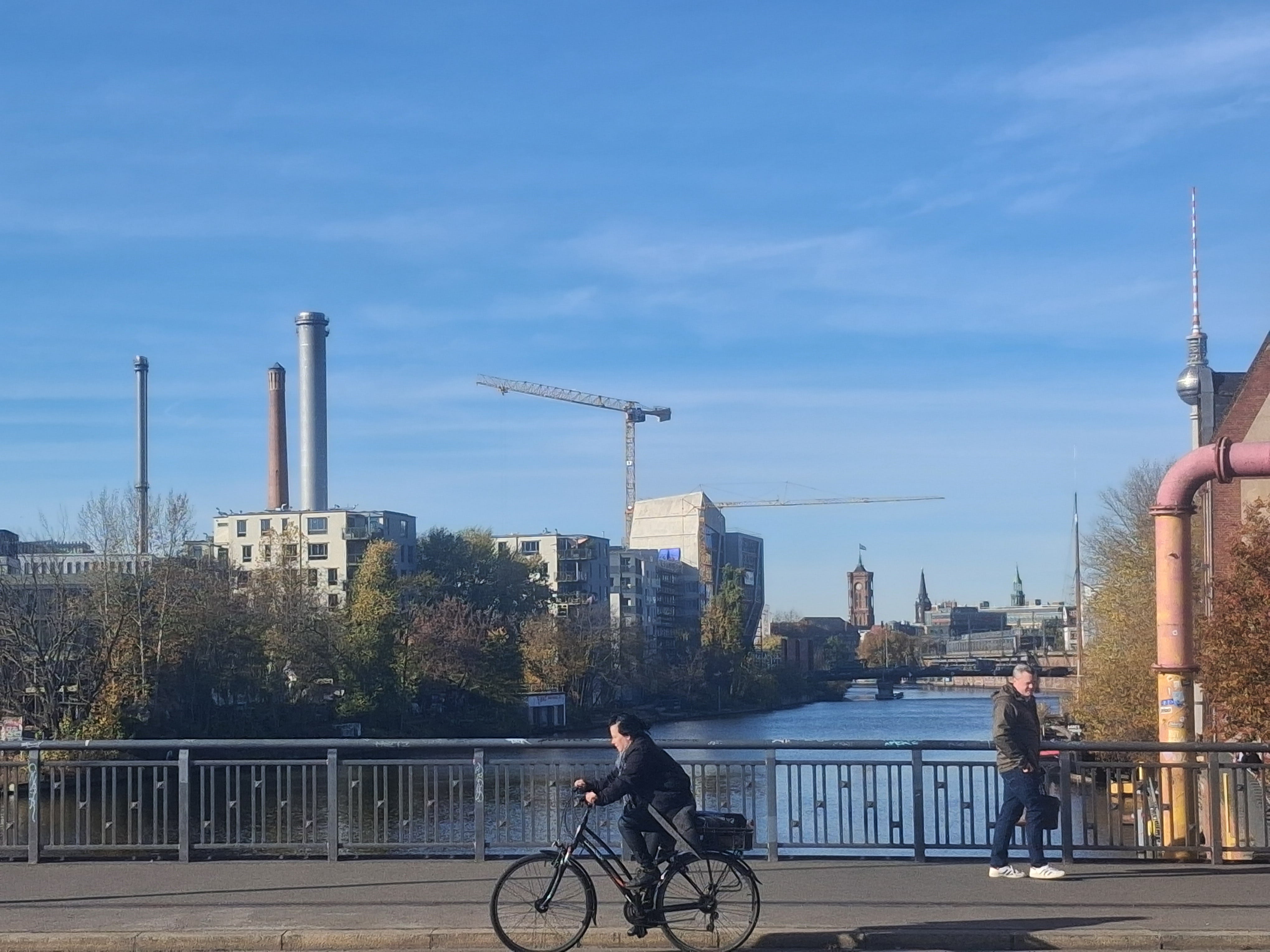
But… along with all the other parts – the 5-over-1 condo buildings with cheeky blinking neon craft beer signs on the ground floor, the urban grit as branding, the largest chunk of the former Berlin Wall, along the River Spree, being dedicated to a bunch of largely really fucking fugly street art for people’s vacay snaps. The café-bar full of tech bros with fashion mullets doing their most horrifying unintentional Lex Fridman impressions. The café-bar full of vacuous talking points on the politics of the Anglosphere, with the coked-out girl castigating me for my moral failings as a yt, ironic given that she was extremely white-passing and far more stylish than me. The café-bar full of wealthy, thin-lipped, and poised xennial Germans in understated luxury apparel who expressed a visceral repulsion at me and looked like they were about to go do rites of Moloch. You tell me I’m in Europe, but I’m seeing fucking tip screens?

My suspicion is that part of what makes Berlin feel like Brooklyn is it has managed to achieve that ultimate dream of Enlightened Brooklyn, to be entirely outside the United States, in an imagined cross-national interzone, at both its best and its worst.

And if I’m going to make this strawman even bigger, the ultimate dream of liberal-minded Germans, it seemed, was to liberate themselves from any notion of complicity with the long shadow of the German past. The response I heard from the very charming, very kind Germans of a liberal cast that I met was that theirs was the land that empowered the WORST GUY EVER, making them by corollary the WORST PEOPLE EVER, as if by self-flagellating sufficiently, the guilt of the past will finally be expiated. Like all forms of self-proclaimed guilt, this is masochism, which is another German specialty, but that’s a tale for a different day. Strike dear mistress and cure his heart.

(see Hans-Georg Moeller on the topic for more and smarter)

And it’s unfortunately an attitude that often translates into self-righteousness. We feel the worst, and therefore we are the best. I have never been told not to do something by strangers more in my life. And we can freely sneer at the less enlightened.

I went to a Diane Arbus exhibition at the Gropius Bau, and Arbus is someone whose work I’ve always adored, but I always felt somewhat uneasy towards. When writers talk about her, they tend to fawn over the dignity and accord she gave to her outsider photographic subjects, but I always felt there to be something lurid about her work. At the exhibition, I looked at the catalog for the photos that really did seem to make their subjects look glamorous, and they were Mia Farrow, Norman Mailer, and various Warhol Superstars. Nudists, drag queens, carnival freaks, and snake handlers and just ordinary, not very attractive, not very poised people seemed almost like fish on display at the market, with the same dead-eyed stares of whole fresh trout on ice, 10 bucks a pound.
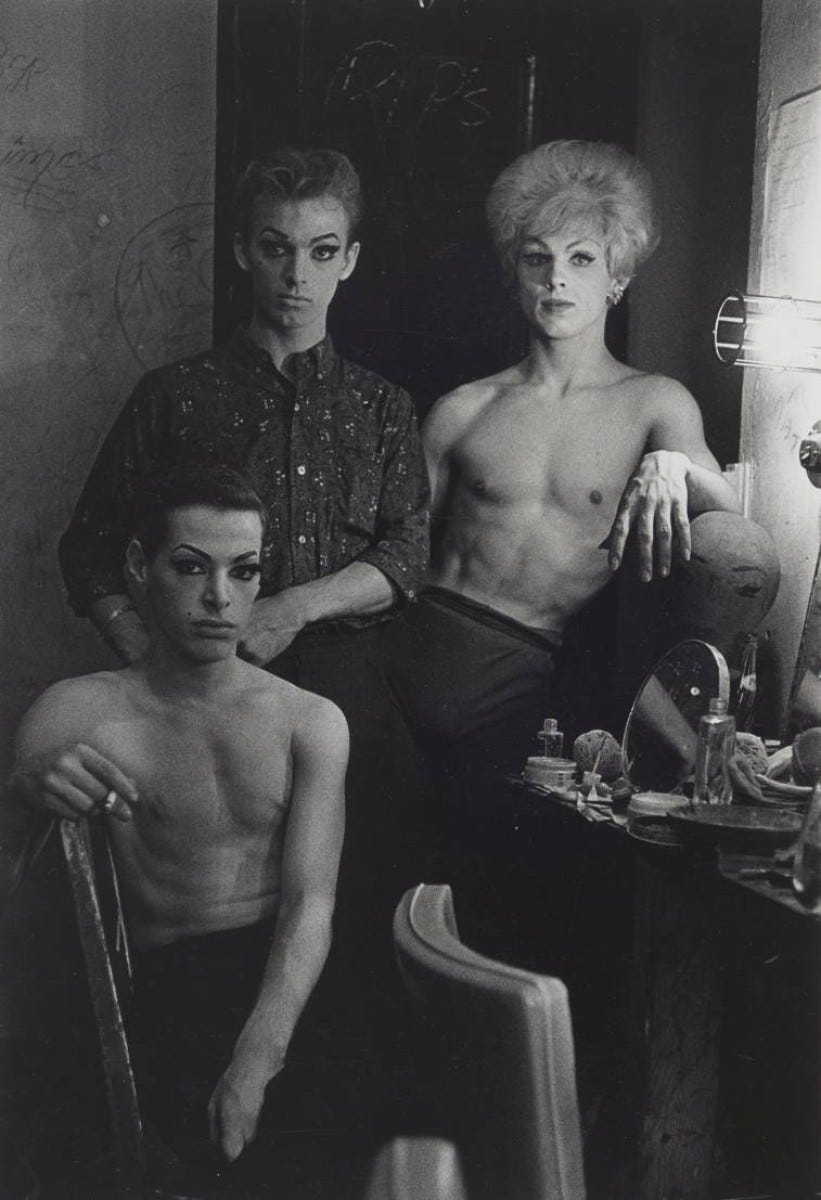
And seeing all the impeccably dressed Berliners gawking at the gawking just felt awkward, especially when I gawked back at them.

Arbus, I think, genuinely did want to find the common humanity in her subjects, and the more I learn about her life, she saw her outsiders as kindred spirits, troubled soul that she was. And her empathy is that of someone bearing the same wound, one which maybe we cannot admit we all have. She exposes us to an atavistic form of ourselves, stripped away, rendered vulnerable in all our odd thoughts, flabby, marked, disabled, re-gendered, somehow violated.

But were the gaunt faces of the masterworks of the German Renaissance that I had seen that much different?

And maybe through Arbus’ view of America, they were looking through their chic square glasses at something very familiar.

At the children’s park, the phrase “Sigma Boy,” which I believe is in reference to a TikTok slop content earworm by Russian children, is spraypainted across the slapdash plywood. Lord of the Flies by way of Andrew Tate.

For a long time after the war, the so-called “Rhenish model” did a lot to soften the contradictions of capitalism in West Germany, a social market economy with strong representation of labor in corporate decision-making, and strong bumpers in place to prevent more extreme beliefs on either the right or left, turbocharged by Marshall Plan money. Meanwhile, East Germany, for all its problems, did provide a basic standard of living for its citizens. But since then? The rise of austerity politics in the West, and shock therapy programs in the East – you’re on your own, bucko.

Karl Marx’s childhood home in Trier is now a dollar store.

Which conversely, makes the rise of the AfD, particularly throughout the Eastern regions, a horrifyingly logical likelihood, a black mark that’s increasingly impossible to ignore. Not that their economic position was equitable – they, like all right-populist parties at present, realize they just have to employ proletarian rhetoric without needing any substantive policy behind it. I had thought of them as just another gang of lummoxes, but when their platform includes banning the sale of kosher meat… But whoever their targets may be in 2025, let’s just say I can feel the nights getting a bit more crystalline.

“Ha ha you Americans, you voted for Trump.”

Yeah, well go to Thuringia motherfucker.

And born of rich Amerikaner loam, I only see a series of distorted mirror images. The world is burning. Die vaterland is calling me back. I have a plan…. Mein führer! I can walk!

We’ll meet again…

Thursday, September 25, 2025

The World You Were Born In...

You know the phrases. “Hold my beer.” “The perfect ___ does not exi…” You get the idea. The tired cliches plunged from the depths of the discourse, irredeemable mass-market quips. Some of them, to be fair, were once clever, before multiplying like anaerobic bacteria in the hogshit lagoons of 4chan, Reddit, etc., repeated by 14 year olds and bots until their mere invocation becomes repulsive. You can call them memes, but you could argue that all idioms, sayings, and turns of phrase were really just memes before we called them memes. However, these phrases are used more like memes – impervious to creativity and lacking defined by their repetition, they are a pure statement of one’s own social and discursive standing. Sometimes deployed sincerely, sometimes ironically, almost always repulsively.

But sometimes one actually makes an impact -- not much of one, perhaps, but enough to spark inquiry rather than a dismissive snarl. 

1970s grain, VHS font, doomed buildings. If it was in a gallery, it would get far higher praise.

A memory of years ago, right before I first stepped off American soil for a long period, for my first travel adventure in Asia. I sent out a Facebook message on blast to maybe 20 or so people one day, saying I’d be camped out at the Redwood on Howell and Belmont (RIP) that evening. And I drank dirt-cheap pints of PBR and read library books in the interim – I finished Paul Auster’s In the Country of Last Things and started Andrei Codrescu’s Wakefield if I remember correctly – and friends came by in ones and twos and threes, most of them not saying when or if they were swinging by, just coming and going, on their way to or from other loose hangout sessions, gigs, theatrical rehearsals, shifts at the bar or the café, while All the President’s Men played silently on the projector and someone put Guided by Voices on the jukebox.

It's hard to even imagine a world like that now.

But look a little bit further, and a certain hollowness emerges. The memelords, while they get the feels right, seem to lack that sort of long, telescopic view of their own past. They’re pretty young, and despite the aesthetic cribbing from other eras, they’re not talking about the longue durée of history, but like 2017. When you have fewer rings on your trunk, you think about time in more compressed terms. Remember those “Only ‘90s kids will remember this!” posts from back in the day, posted shockingly quickly after the ‘90s had themselves ended? That being said, the past decade or so in particular has been a motherfucker. COVID, of course, being the big thing, but many, many more things have happened in the interim – and it’s only natural for younger and youngish people to contrast the chaotic present with the more sedate if bovine world they associate with the ’90s and even ‘00s. 

Therefore, it’s unfortunate but unsurprising that the term in question has its origins and has had its greatest currency in the world of online “traditionalists,” a cadre that seems to mostly consist of alienated boys and men, mostly young, but with quite a few divorce dads and the like in there, who in their worse moments fancy themselves as Saxon warriors or Goldwater Republican picket-fence patriarchs deprived of their destiny. Men who believe that in a better world they would be slaying Saracens right now, or puffing their pipe in the study while wifey massages their shoulders and pours them another dry martini (although something tells me many of their taste buds are nowhere near mature enough to enjoy an actual dry martini). Plenty of ink has been dedicated to this kind of modern creature, but it’s hard to see how this could be anything other than the logical end result of a mirror maze of signifiers without signified, and every single moment of one’s life becoming a consumer choice, with minimal regard to what it is to be human. Their solutions are idiotic and often psychotic, but their instincts are not too far off. 

I would like to dance through the chaos, to take this Spinozist joy in the present, even amid the ugly world, but it’s tough to find the energy. Beer and peanuts and Paul Auster at a long-gone Seattle tavern. Did any of us know what was coming?

Monday, September 1, 2025

Twilight of the Public Access Idols

It’s a long-time cliché of art history that kitsch eventually turns into a high art. It wasn’t that long ago, for example, that Victorian gingerbread was seen as the disgusting affectation of a less enlightened time, and it was only in the past 10 years that Anglo-American brutalist architecture has been reappropriated as the signifier of a more optimistic era rather than just some gray concrete shit. If we’re going to extrapolate further, it’s so easy to mistake age for wisdom, and stupidity for prelapsarian virtue, that I always have to caution myself against it, to put certain automatic skepticism triggers in place, lest I be deceived.

But if you have that crate-digger mentality, a desire to go through the archives and find past ideas and expressions, you’ll always be tempted to find enlightenment therein. It’s something I used to do a lot, in the hope that I could somehow recontextualize and redo what I saw, to make my mind palace into a Joseph Cornell box. Like most people, as I have aged, immediate and quotidian requirements have taken precedence, and yet there will always be an allure in the grainy filmstrip, the library book last checked out in 2003, the potshard. 

And in that context I recently watched 2004’s Public Access Hollywood (available in its entirety here), and it was an opportunity to revisit one such strange world, the legendary LA public access channels, widely regarded as the best in the country, and the strange personalities who inhabit it.

I’m not sure how many people under the age of 30 have even watched public access, but I’m sure many of them know the aesthetic of it – grainy video stock, ill-fitting polyester, primitive digital effects, and general amateurism and incoherence. Famously crappy, famously occasionally very weird programming produced on non-budgets in local cable markets across America, a frequently parodied (see any number of classic SNL sketches from Wayne’s World to Goth Talk) format from a pre-Youtube era where the idea of any audiovisual media beyond the family vacation video being homemade was novel. A clear lineage to the two ferns that Zach Galifianakis sits between (by god, is even that reference long-outdated?). Even by my day, public access was viewed as a strange and quaint thing, something we found through early Youtube clips. The last memory I have of even watching it on an actual tee vee was in my early 20s, in the margarita-and-marijuana haze between viewings of Project Runway with my gay housemates. 

The first viral public access clip I remember was The Spirit of Truth, in which a borderline street preacher randomly cites Bible passages without quoting them from what looks like a telephone book while insulting callers, against a backdrop of Yosemite while Funkadelic’s “One Nation Under a Groove” plays. Across America, his quotes were dropped in the same way Antwone Dodson’s would be a decade later. He’s not in Public Access Hollywood – a little too ephemeral.


So who is in the documentary? The focus is on the mainstays, who, while perhaps, less intense in their insanity, are their own variety of eccentric. There’s David Liebe Hart’s Junior Christian Science Bible Lesson Program, starring his puppet Chip the Black Boy, with crack-is-wack messaging and songs about helpful aliens. More intentionally weird, there’s Dan Kapelovitz and the team behind Three Geniuses, slashing the media form of television to bits, and commenting on the rebirth and “re-death” of psychedelia, a stage of weirdo anti-humor somewhere in its evolution between Andy Kaufman and Devo on one end and Gen Z Dada on the other. Or the bro version, Zuma Dogg shouting shit on Sunset in his Oakleys and ‘90s condom beanie, a kind of demonic Ashton Kutcher. For more informative content, there’s Dr. Susan Block’s sexual education program, a cavalcade of bizarre proto-sex-positive theater, dressed in vinyl and spanking her guests. Mediating it all, the sort of cultural arbiter was Michael Devine of Hollywood and Devine, whose variety show featuring the lovely freaks and weirdos of Los Angeles feels like a chopped and screwed version of Letterman. And the one who garners the most screen time and most pathos, there is Francine Dancer, chubby and dancing in her lingerie while maintaining that she would never do something so classless as to dance nude, confined to a wheelchair when she’s not dancing. No fixed address, much beloved within her niche community but at best an absurdist artifact outside it.

I think you get the idea. Cranks who interrupt municipal council meetings worldwide, desperate souls, who, above all else, want other people to listen and understand, pranksters and ironists in it for the lulz who could probably cite Baudrillard and Debord off-camera, or at the very least Tony Wilson and Malcolm McLaren, and the dreamers in rattrap apartments who still believe they can make it in real Hollywood, despite their often-dire circumstances. This studio was their home, and you kind of love it for them. 

But what the makers of Public Access Hollywood didn’t know was that in 2004, they were already at the end of an era.

One thing they acknowledge is that by that point, reality TV had already become an institution. From its inception point in the late ‘90s, it had spread to become the standard for the cable networks, deliciously cheap to produce and packed with mass appeal. Like the public access stars, it provided an ostensibly (adverb doing some heavy lifting there) authentic appeal, and a lurid opportunity to see one’s fellow man at his ugliest and most depraved.

And what they further probably couldn’t have anticipated was that the ecosystem of public access television, one which claimed to bypass the gatekeepers of audiovisual entertainment, was about to expand to the whole damn world with the rise of Youtube (the irony being that that is the very platform where I watched the documentary). 

It logically follows that this is something that the drive towards algorithmic correctness inevitably destroys, not only preventing us the audience from seeing the wilder and weirder side of things and trying to get us to watch preapproved slop, but also incentivizing creators into producing things more algo-friendly (with the occasional oddities like Elsagate videos representing a genuine flaw in the system, fucked up as they are). Sure, previous forms of media were beholden to a hooting and hollering public, but the algorithm seems even worse.

Which might be why, despite the similar hypothetical freedom, few of the public access stars would find a home on this new platform. And beyond that more coldly rational lack of economic incentive, there’s also a deluge of competing content, rather than a particular zone of permitted bizarre. In a world where everyone is a weirdo, and you can turn on or shut off their weird at will, it’s irrelevant. But when you turn on the television and randomly flip to public access, it’s something different entirely. 

I miss TV… Some of this may sound stupid. I miss commercials that were louder than the programs. I miss the phrases ‘Order before midnight tonight’ and ‘Save up to fifty percent and more.’ I miss being told things were filmed before a live studio audience. I miss late-night anthems and shots of flags and fighter jets and leathery-faced Indian chiefs crying at litter. I miss ‘Sermonette’ and ‘Evensong’ and test patterns and being told how many megahertz something’s transmitter was broadcasting at.’ He felt his face. ‘I miss sneering at something I love. How we used to love to gather in the checker-tiled kitchen in front of the old boxy cathode-ray Sony whose reception was sensitive to airplanes and sneer at the commercial vapidity of broadcast stuff.’…

The man tended to look up at him like people with legs look up at buildings and planes. ‘You can of course view entertainments again and again without surcease on TelEntertainment disks of storage and retrieval.’ 

Orin’s way of looking up as he remembered was nothing like the seated guy’s way of looking up. ‘But not the same. The choice, see. It ruins it somehow. With television you were subjected to repetition. The familiarity was inflicted.”

- David Foster Wallace, The Book You Should Read Even Though People Will Call You a Lit Bro 

But concomitant with the rise of Youtube was the rise of another media machine – Adult Swim. Here, the aesthetics of public access, along with industrial video, low-end public broadcasting, and every other ephemeral form of media from the cable-and-VHS era would be recycled into the lysergic mandalas of Tim and Eric et al. We could view the original vomit of the era on Youtube, and we could view the avant-garde pisstakes on Adult Swim. Indeed, Heidecker, Wareheim, and Co. had the wisdom and foresight to bring some of the LA public access idols to the national stage. I’m guessing a lot of the readership will be more likely to know David Liebe Hart in this capacity. All the food is poison. Keep your meat ice-cold.


But his story seems to be one of the few successes here, and even that success is pretty circumscribed. 

Maybe they would have always been fated to obscurity, but maybe they could have been fortunate enough to breach containment and find their improbable sliver of success. I’m reminded of another LA icon, Angelyne, the bleach-blonde daughter of Polish Holocaust survivors known more for her billboard poses – an early stab at guerrilla marketing – than any of her purported entertainment talent. It would be hard to imagine her transposed to today without a couple seasons on Bravo, or at least a horny Twitch following.

Part of the reason the documentary works in 2025 is that it plays at this historical disconnect, and part of the reason it would have worked upon release 20 years ago is that it plays on the very fundamental feels of the desperate attempts to keep a dream alive. One of the oldest of LA cliches is that of a graveyard of aspirations, a place where the ideology of individual merit runs headlong into bitter reality. And every year, we hear new stories that reinforce the trope, whether lasciviously documented for TMZ, or as the backstories for stalkers and mass shooters. 

I put in some hours, but the fate of most of the performers in Public Access Hollywood is difficult to suss out in casual searches. David Liebe Hart’s latest credit involves Lloyd Kaufman of Troma / Toxic Avenger fame, so he’s continuing to participate in weird media. Dan Kapelovitz still seems to be invested in making fucked up shit, and for that he is to be saluted. The latest project in his IMDB profile is 120 Days of Sodom… Literally, a cut-up of Pasolini’s Salo with a 120 day runtime (feel free to watch it streaming, it’s ongoing), and he seems to be pursuing a side passion for left-wing electoral candidacy (seeing someone else tragically ahead of his time?). Zuma Dogg still seems to be doing pranks in his sunglasses, to a tiny audience. Susan Block simultaneously had a career as a sex therapist and regular on Real Sex on HBO – raise your hand if you remember furtively watching that in the basement, only to be deeply deeply disappointed – and still has the Susan Block Institute, but the website looks like something from 1998, which seems awfully appropriate for a woman seemingly designed for that very 1990s precise balance of lewd, subversive sociosexual commentary. Michael Devine seems to have died from cancer in 2006. And Francine Dancer is still out and about in Hollywood, occasionally popping up on someone’s Instagram, still smiling.

But all of that being said, I ran into quite a few dead ends. Whole swaths seem to be likely dead media, and I doubt I could find much more than the minima I’ve already found, unless I were to chase down moldering basement VHS collections and chase the performers for follow-ups (something I’d totally do if I wasn’t doing this whole thing on top of a full-time job plus freelance writing for actual cash money). Honestly, more than anything else, I just wanted to find signs of life, and maybe it was parasocial, maybe it was morbidly curious, but I wanted confirmation that they were OK. 

Maybe I held hope because in their own way, these were truly the last bohemians, scraping by on the fringes of Hollywood. They said fuck it, did their own thing, on the public commons, with minimal regard as to market incentive. The things that followed inevitably come off as moneymakers, aping authenticity as part of their branding. Reality television, of course, or the monstrous sponsored-content machine that Youtube has become. Even those weirdo Adult Swim shows, as much as I love them, are shaped by the requirements of the advertisers, and Tim and Eric’s legendary, absurdist late ‘00s Absolut ad series were at the end of the day still Absolut ads.

So what we get is real folk art from a lost world. And the documentary, 20 years on, its cri de coeur.